Complete Overview of Industrial Freeze Dryers and Their Industrial Uses
Industrial manufacturing and processing often require methods that help preserve products while maintaining quality, stability, and usability. One technology widely used across several industries is the Industrial Freeze Dryer.
These systems help remove moisture from materials while preserving their structure, composition, and important characteristics.
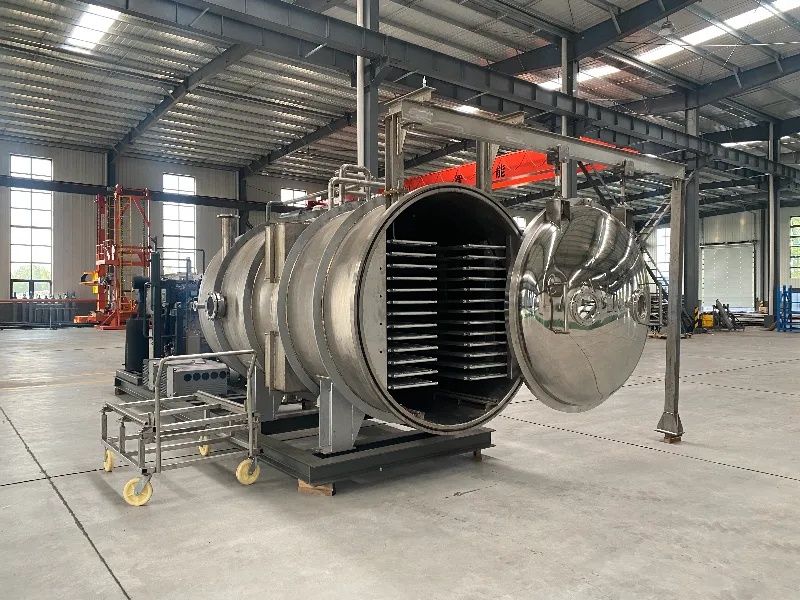
From pharmaceutical manufacturing to food processing and biotechnology applications, freeze drying has become an important process for handling products that need long-term storage and stability. Understanding how Industrial Freeze Dryers work, their components, and their industrial applications can help businesses and professionals better understand this valuable technology.
This guide provides a complete overview of Industrial Freeze Dryers, explaining their working principles, major components, advantages, limitations, and industrial uses in a clear and easy-to-understand way.
What Are Industrial Freeze Dryers?
An Industrial Freeze Dryer is a specialized machine used to remove moisture from materials through a process known as lyophilization or freeze drying. Unlike conventional drying methods that use heat to evaporate water, freeze drying removes moisture by converting frozen water directly into vapor through sublimation.
This process helps preserve the original structure, shape, and characteristics of a product while significantly reducing its moisture content.
Industrial Freeze Dryers are commonly used when products are sensitive to heat and require careful handling during the drying process.
Understanding the Freeze Drying Process
The freeze drying process consists of several stages that work together to remove moisture efficiently.
Freezing Stage
The first step involves freezing the material at very low temperatures. Water present within the product becomes solid ice.
Proper freezing is important because it influences the quality of the final dried product.
Primary Drying Stage
After freezing, the product is placed under vacuum conditions. Under low pressure, ice changes directly into water vapor without becoming liquid.
This process is called sublimation.
During this stage, a significant portion of the moisture is removed.
Secondary Drying Stage
Small amounts of moisture may remain after primary drying. Secondary drying removes residual moisture by gradually increasing temperature under controlled conditions.
This stage helps achieve the desired moisture level for storage and transportation.
Final Product Stabilization
Once drying is complete, the material becomes lightweight, stable, and easier to store for extended periods.
Main Components of Industrial Freeze Dryers
Industrial Freeze Dryers consist of several key components that support efficient operation.
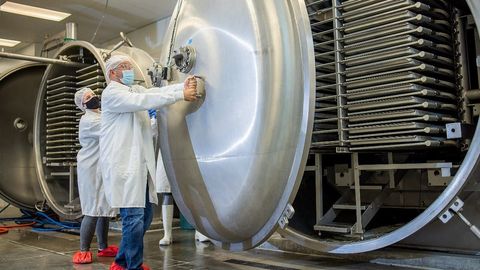
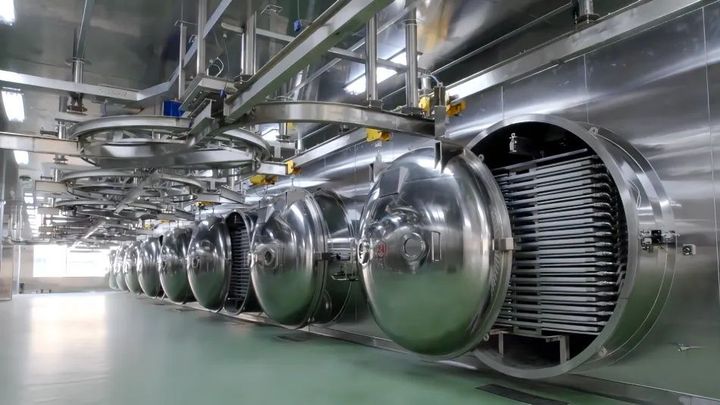
Drying Chamber
The drying chamber holds the products during the freeze drying process.
The chamber is designed to maintain controlled temperature and pressure conditions throughout the operation.
Refrigeration System
The refrigeration system lowers product temperatures during the freezing stage.
This system helps create the conditions necessary for effective sublimation.
Vacuum System
Vacuum pumps reduce air pressure inside the chamber.
Low-pressure environments are essential for transforming ice directly into vapor.
Condenser Unit
The condenser captures moisture removed from the product.
Water vapor generated during sublimation is collected and converted back into ice on the condenser surface.
Control System
Modern freeze dryers use automated control systems to monitor:
Temperature
Pressure
Drying cycles
Equipment performance
These controls help maintain consistent processing conditions.
Why Industrial Freeze Dryers Are Important
Many products can lose quality when exposed to traditional drying methods that involve high temperatures.
Freeze drying provides an alternative approach that helps preserve:
Product structure
Appearance
Chemical composition
Biological activity
Nutritional value
Because of these characteristics, freeze drying has become an important technology across multiple industries.
Industrial Applications of Freeze Dryers
Industrial Freeze Dryers support a wide range of applications.
Pharmaceutical Industry
The pharmaceutical sector frequently uses freeze drying for products that require long-term stability.
Applications include:
Vaccines
Injectable medicines
Biological materials
Research compounds
Freeze drying helps maintain product integrity during storage and transportation.
Food Processing Industry
Food manufacturers use freeze drying to preserve products while maintaining texture and nutritional characteristics.
Common examples include:
Fruits
Vegetables
Coffee products
Dairy ingredients
Prepared meals
The process helps extend shelf life while reducing moisture content.
Biotechnology Industry
Biotechnology organizations use freeze drying for sensitive biological materials and laboratory products.
The process supports preservation while helping maintain biological properties.
Chemical Industry
Certain chemicals require moisture reduction without exposure to excessive heat.
Industrial Freeze Dryers help achieve controlled drying conditions suitable for these materials.
Research and Development
Research facilities frequently use freeze drying equipment for:
Sample preparation
Material preservation
Experimental studies
Product development
The technology supports accurate handling of sensitive substances.
Advantages of Industrial Freeze Dryers
Industrial Freeze Dryers provide several important advantages.
Product Preservation
Freeze drying helps maintain physical structure and product characteristics more effectively than many conventional drying methods.
Extended Storage Stability
Reduced moisture content supports longer storage periods under suitable conditions.
Minimal Heat Exposure
The process operates at relatively low temperatures, making it suitable for heat-sensitive materials.
Lightweight Products
Moisture removal significantly reduces product weight, simplifying transportation and handling.
Improved Rehydration
Many freeze-dried products can regain much of their original structure when moisture is reintroduced.
Factors Affecting Freeze Drying Performance
Several factors influence the effectiveness of Industrial Freeze Dryers.
Product Characteristics
Different materials respond differently to freeze drying.
Factors include:
Moisture content
Density
Composition
Product thickness
Temperature Control
Accurate temperature management supports efficient drying while maintaining product quality.
Chamber Pressure
Maintaining appropriate vacuum levels is critical for successful sublimation.
Drying Time
The duration of the drying cycle depends on product characteristics and processing requirements.
Equipment Design
System design can affect drying efficiency, consistency, and productivity.
Challenges Associated with Freeze Drying
Although freeze drying offers many advantages, some operational challenges may occur.
Long Processing Cycles
Freeze drying generally requires more time than conventional drying techniques.
Complex Equipment Operation
Industrial systems involve multiple components that require careful monitoring and maintenance.
Energy Requirements
The refrigeration and vacuum systems require significant energy input during operation.
Process Optimization
Different products may require customized drying parameters for optimal results.
Modern Developments in Industrial Freeze Dryers
Technology continues to improve freeze drying capabilities.
Advanced Automation
Modern systems use automated monitoring and control features that improve consistency and operational efficiency.
Data Monitoring
Digital platforms provide real-time process tracking and performance analysis.
Improved Energy Management
New system designs focus on reducing energy consumption while maintaining drying performance.
Smart Manufacturing Integration
Industrial Freeze Dryers increasingly integrate with broader manufacturing systems for centralized monitoring and process management.
Selecting an Industrial Freeze Dryer
Organizations evaluating freeze drying equipment often consider several factors.
Production Capacity
Equipment should match expected production requirements.
Product Compatibility
The system should support the characteristics of the materials being processed.
Automation Features
Advanced controls can simplify operation and improve consistency.
Maintenance Requirements
Understanding maintenance needs helps support long-term equipment performance.
Facility Requirements
Available space, utilities, and infrastructure should align with equipment specifications.
Future Outlook for Industrial Freeze Dryers
As industries continue seeking effective preservation methods, freeze drying technology is expected to remain an important processing solution.
Growing demand from pharmaceutical, biotechnology, food processing, and research sectors continues to drive innovation in freeze drying systems.
Future developments may include:
Greater automation
Enhanced monitoring capabilities
Improved energy efficiency
Advanced process control
Increased production flexibility
These improvements can support broader industrial adoption and operational efficiency.
Conclusion
Industrial Freeze Dryers play a significant role in modern manufacturing and processing environments. By removing moisture through sublimation rather than traditional heating methods, these systems help preserve product quality, stability, and structure across a wide range of applications.
From pharmaceuticals and biotechnology to food processing and chemical manufacturing, Industrial Freeze Dryers provide an effective method for handling sensitive materials. Understanding their components, operating principles, advantages, and industrial uses helps organizations make informed decisions about processing technologies and production requirements.
As technology continues to evolve, freeze drying systems are becoming more automated, efficient, and adaptable, supporting the growing needs of modern industries worldwide.