Industrial Freeze Dryers Explained: Technology, Applications, and Benefits
Industrial manufacturing often requires methods that help preserve products while maintaining their quality, structure, and usability. Among the many preservation technologies used across industries, Industrial Freeze Dryers have become an important solution for removing moisture from materials without causing significant changes to their physical characteristics.
From pharmaceuticals and food production to biotechnology and research facilities, freeze drying technology supports a wide range of applications. Understanding how Industrial Freeze Dryers work, where they are used, and the advantages they provide can help businesses and individuals gain a clearer picture of this specialized technology.
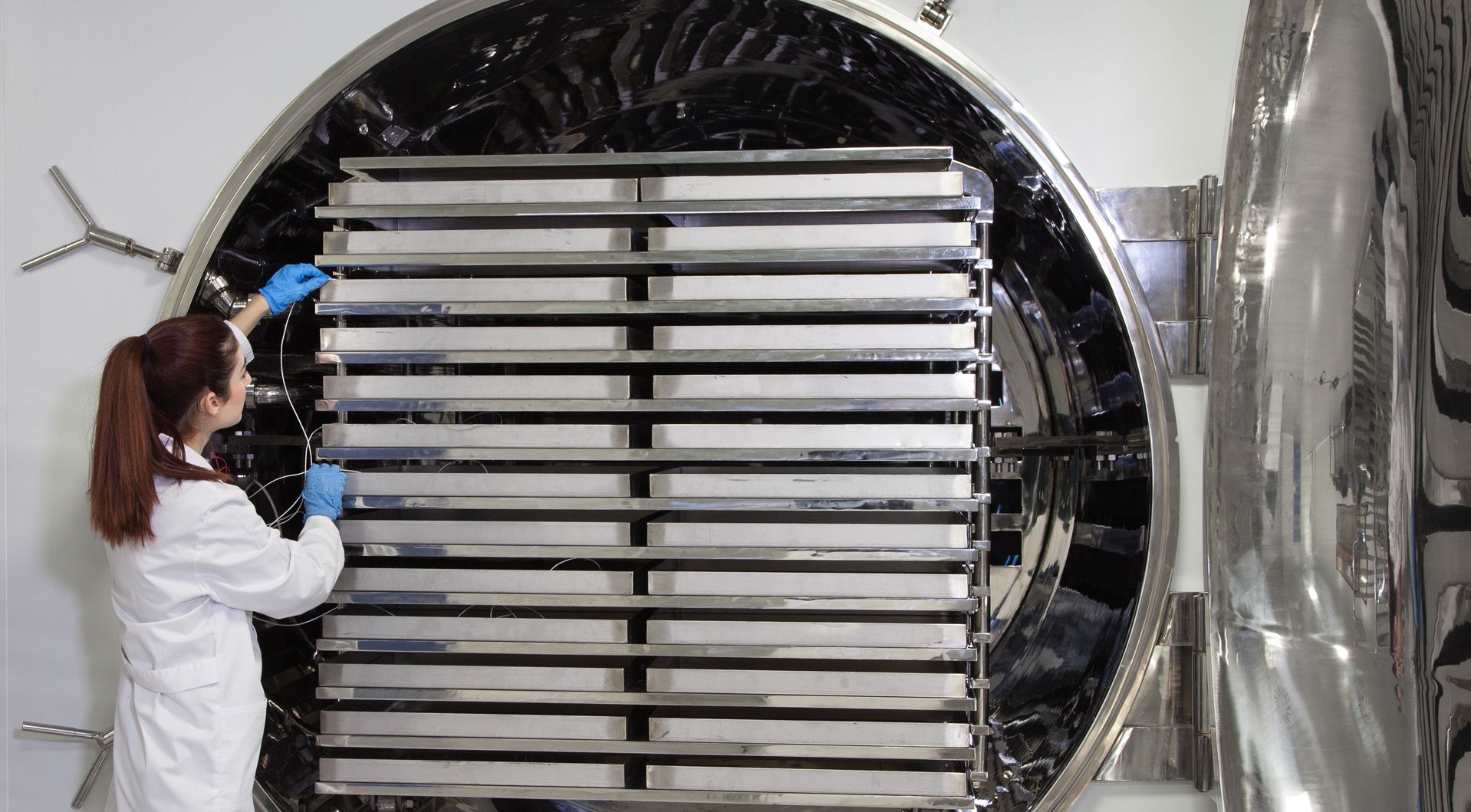
What Are Industrial Freeze Dryers?
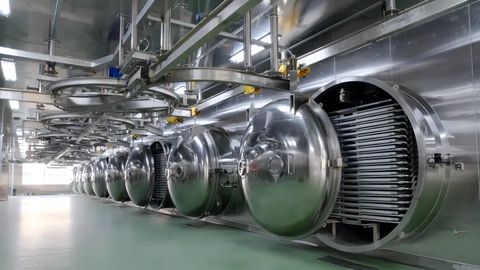
Industrial Freeze Dryers are large-scale systems designed to remove water from products through a process known as lyophilization, or freeze drying. Unlike traditional drying methods that use heat to evaporate moisture, freeze drying removes water by converting ice directly into vapor under controlled conditions.
This process helps preserve the original shape, texture, and composition of the material being dried.
Industrial Freeze Dryers are commonly used when maintaining product integrity is important. They are capable of processing large volumes of material while providing consistent drying results.
Understanding the Freeze Drying Process
To understand Industrial Freeze Dryers, it is helpful to examine the basic stages involved in freeze drying.
Freezing Stage
The product is first frozen at very low temperatures.
Water within the material turns into ice, preparing it for the next stage of the process.
Primary Drying Stage
After freezing, the chamber pressure is reduced.
Under these conditions, ice changes directly into water vapor without passing through the liquid phase. This process is known as sublimation.
Most of the moisture removal occurs during this stage.
Secondary Drying Stage
A small amount of moisture may remain after primary drying.
During secondary drying, temperatures are gradually increased to remove residual moisture and improve product stability.
Final Packaging
Once drying is complete, the product is prepared for storage, transportation, or further processing.
These stages work together to produce a stable and long-lasting product.
How Industrial Freeze Dryers Work
Industrial Freeze Dryers combine several components to achieve effective moisture removal.
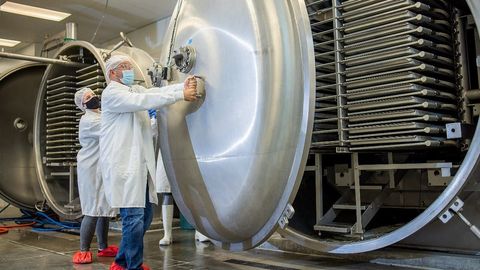
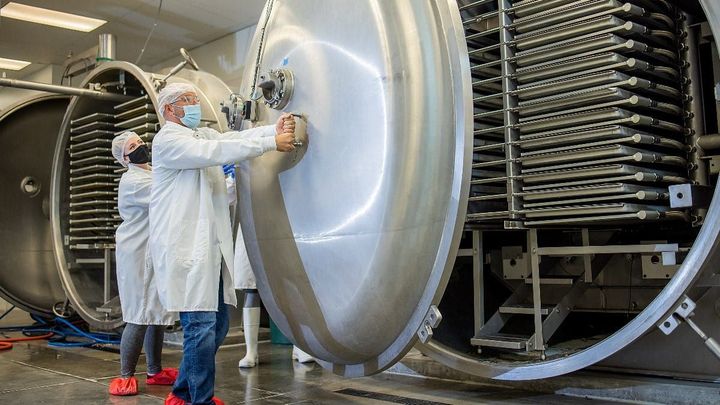
Drying Chamber
The chamber holds the material being processed.
Products are typically placed on trays or shelves designed to support uniform drying.
Refrigeration System
This system creates the low temperatures necessary for freezing the product.
Vacuum System
Vacuum technology lowers chamber pressure, enabling sublimation to occur efficiently.
Condenser
The condenser captures water vapor removed from the product and converts it back into ice.
Control System
Modern Industrial Freeze Dryers use computerized controls to manage temperature, pressure, and drying cycles.
These systems help maintain consistency throughout the process.
Why Freeze Drying Is Different from Conventional Drying
Traditional drying methods often rely on heat to remove moisture.
While effective in many situations, high temperatures can sometimes alter product characteristics.
Freeze drying differs because it operates at much lower temperatures.
This approach can help preserve:
Product structure
Appearance
Nutritional components
Biological activity
Chemical stability
As a result, freeze drying is often chosen for materials that require careful handling.
Common Applications of Industrial Freeze Dryers
Industrial Freeze Dryers support a variety of industries.
Pharmaceutical Manufacturing
Many pharmaceutical products require long-term stability.
Freeze drying is commonly used for:
Vaccines
Injectable medications
Biological materials
Research compounds
The process helps maintain product effectiveness during storage.
Food Processing
The food industry uses freeze drying to preserve products while retaining flavor and texture.
Examples include:
Fruits
Vegetables
Coffee
Herbs
Prepared meals
Freeze-dried foods often have extended shelf life and reduced weight.
Biotechnology
Biotechnology organizations frequently handle sensitive biological materials.
Freeze drying helps preserve:
Enzymes
Proteins
Cell cultures
Diagnostic materials
Research Laboratories
Scientific research facilities use freeze dryers for sample preparation and preservation.
Chemical Industry
Certain chemicals and specialty materials benefit from moisture removal through freeze drying.
Benefits of Industrial Freeze Dryers
Several advantages contribute to the widespread use of Industrial Freeze Dryers.
Extended Product Stability
Removing moisture helps reduce the likelihood of product degradation during storage.
Preservation of Structure
Products often maintain their original shape and appearance after drying.
Reduced Weight
Moisture removal decreases overall product weight, simplifying transportation and handling.
Improved Storage Efficiency
Freeze-dried products generally require less storage space than fresh materials.
Consistent Product Quality
Modern control systems help produce uniform drying results across large batches.
Long-Term Preservation
Many freeze-dried products remain stable for extended periods when stored appropriately.
Industries Benefiting from Freeze Drying Technology
Many sectors rely on Industrial Freeze Dryers to support production and preservation requirements.
Healthcare
Healthcare applications often require highly stable pharmaceutical products.
Agriculture
Agricultural organizations may use freeze drying for research, seed preservation, and specialty crop processing.
Food Manufacturing
Food producers use freeze drying to create products with long shelf lives and convenient storage characteristics.
Scientific Research
Research institutions rely on preserved samples for ongoing studies and analysis.
Specialty Chemical Production
Certain chemical materials benefit from low-temperature moisture removal processes.
Factors to Consider When Evaluating Industrial Freeze Dryers
Organizations selecting freeze drying equipment typically evaluate several factors.
Production Capacity
Capacity requirements depend on processing volumes and operational goals.
Product Characteristics
Different products may require specific temperature and pressure settings.
Automation Features
Advanced automation can improve consistency and operational efficiency.
Energy Efficiency
Efficient systems help optimize resource utilization during drying cycles.
Maintenance Requirements
Regular maintenance supports long-term equipment performance.
Scalability
Organizations often consider future production growth when evaluating equipment.
Challenges Associated with Freeze Drying
Although freeze drying provides many benefits, certain challenges should also be considered.
Processing Time
Freeze drying cycles can be longer than conventional drying methods.
Equipment Complexity
Industrial systems contain multiple specialized components that require careful operation.
Process Monitoring
Successful drying depends on accurate control of temperature and pressure conditions.
Product-Specific Requirements
Different materials may require customized drying parameters.
Despite these challenges, freeze drying remains an important preservation technology across many industries.
Technological Advancements in Industrial Freeze Dryers
Technology continues to improve freeze drying systems.
Recent developments include:
Advanced monitoring tools
Automated process controls
Improved vacuum systems
Enhanced refrigeration technologies
Data tracking capabilities
Remote system management
These innovations help improve consistency, efficiency, and operational visibility.
The Future of Industrial Freeze Dryers
As industries continue to seek reliable preservation methods, Industrial Freeze Dryers are expected to remain an important part of manufacturing and research environments.
Growing demand for stable pharmaceutical products, specialized food processing, biotechnology applications, and scientific research may encourage further technological advancements.
Future systems may feature greater automation, improved energy performance, and more precise process controls, helping organizations manage increasingly complex production requirements.
Conclusion
Industrial Freeze Dryers play a significant role in modern manufacturing, research, and preservation processes. By removing moisture through controlled freezing, vacuum conditions, and sublimation, these systems help maintain product quality while extending storage stability.
From pharmaceutical production and food processing to biotechnology and scientific research, freeze drying technology supports a wide variety of applications. Understanding the technology, benefits, and operational considerations associated with Industrial Freeze Dryers provides valuable insight into one of the most widely used preservation methods in industrial environments today.